Buyer's guide
Real vs Fake Himalayan Salt Lamps: 7 Checks From a Salt-Mining Family
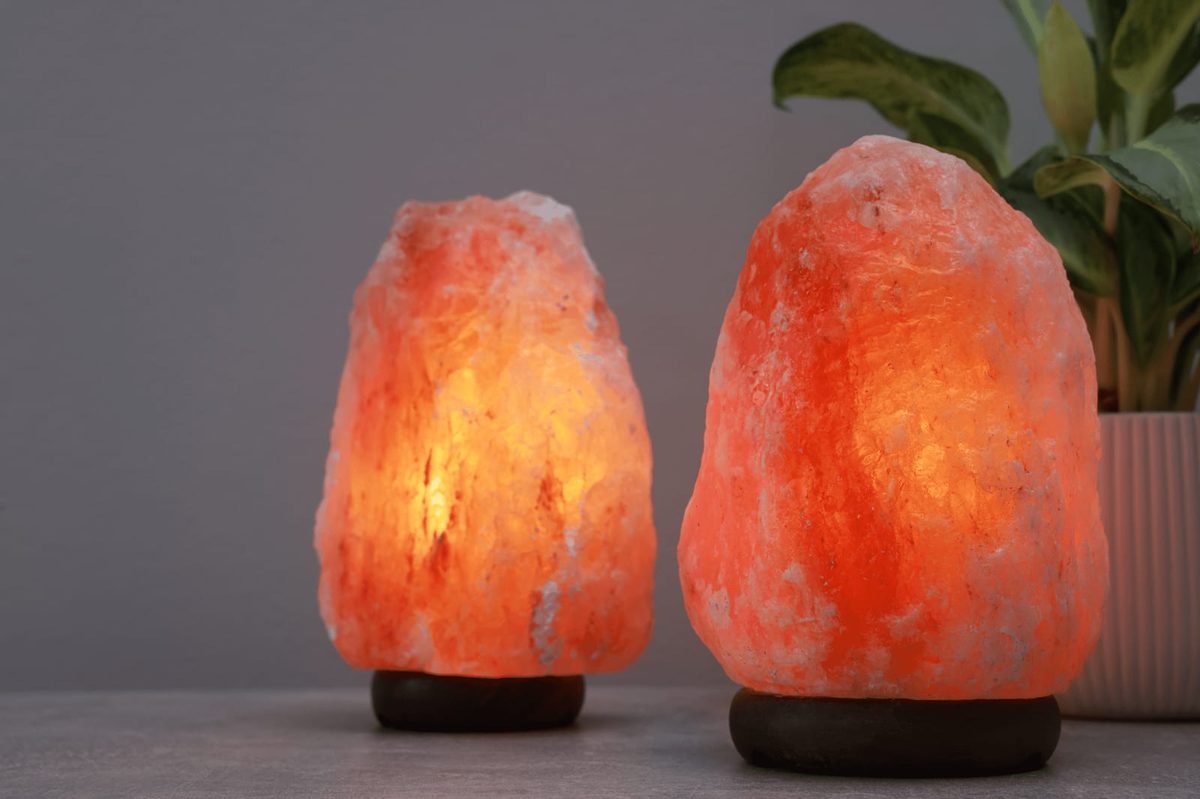
A real Himalayan salt lamp sweats a little in humid air, shows uneven rose and orange tones with white veining, glows a soft warm amber rather than bright white, and feels heavier than it looks. Fakes are usually uniform in colour, unusually light, glow too brightly, and never gather moisture. All genuine Himalayan salt comes from the Salt Range in Punjab, Pakistan. Our family has mined and exported this salt for three generations, so here are the seven checks we would run ourselves.
| Check | Real Himalayan salt | Likely fake |
|---|---|---|
| Sweats in humid air | Gathers a few surface droplets | Stays bone dry, always |
| Colour | Uneven rose to terracotta with white veins | Uniform, vivid, identical pink |
| Glow | Soft warm amber, like an ember | Bright white, lights the room |
| Weight | Dense, heavier than it looks | Light for its size |
| Damp-cloth test | Faint pale salty film at most | Vivid colour rubs off (dye) |
| Shape | One of one, chipped, asymmetric | Perfectly moulded, identical units |
| Named source | Salt Range, Punjab, Pakistan | Vague or refuses to say |
Does it sweat in humid weather?
Yes, a real Himalayan salt lamp gathers a few droplets of moisture on its surface in humid weather, while a fake stays completely dry. Salt is hygroscopic, meaning it naturally draws a little water out of humid air. This is the single fastest test.
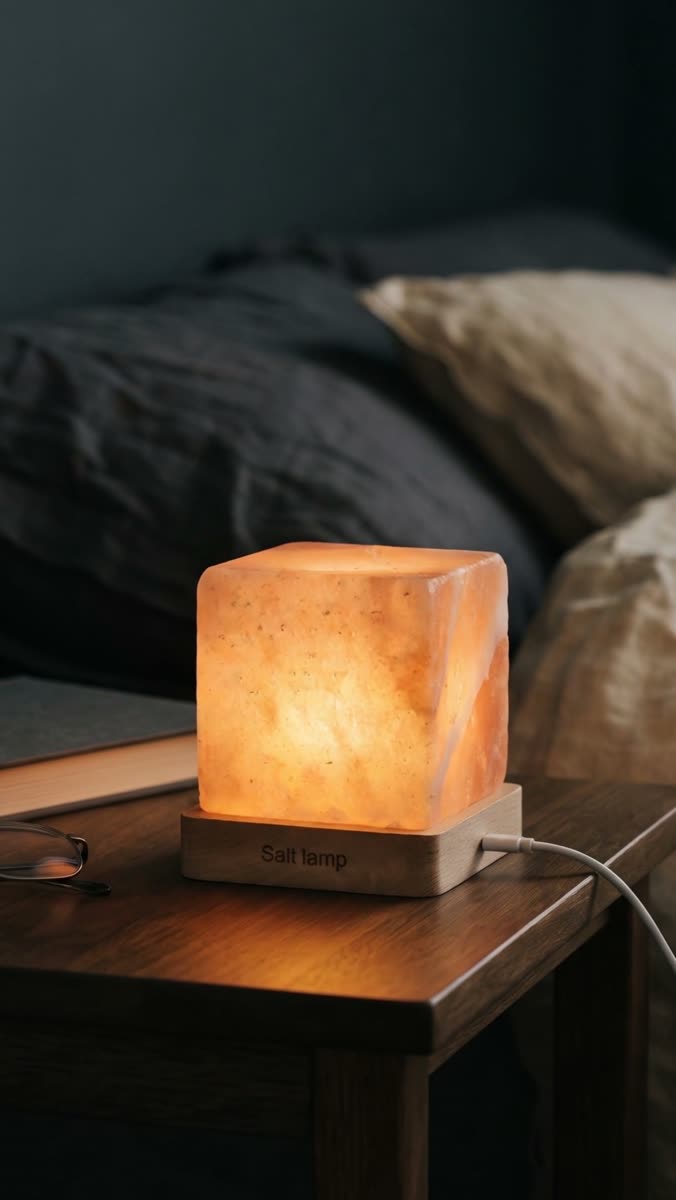
Real salt sweats a little. Fake salt never does.
Leave the lamp unlit overnight in a humid room. A genuine crystal will feel slightly damp or beaded by morning; a resin or glass imitation will feel exactly as dry as when you left it. Keeping the lamp switched on keeps the gentle warmth drawing that surface moisture back off.
Is the colour uneven, with white veins?
A real lamp shows uneven colour, blushing from soft pink to deep terracotta with pale white veins running through it. A perfectly uniform, vivid pink all over is a warning sign, because natural crystal never forms in one flat shade.
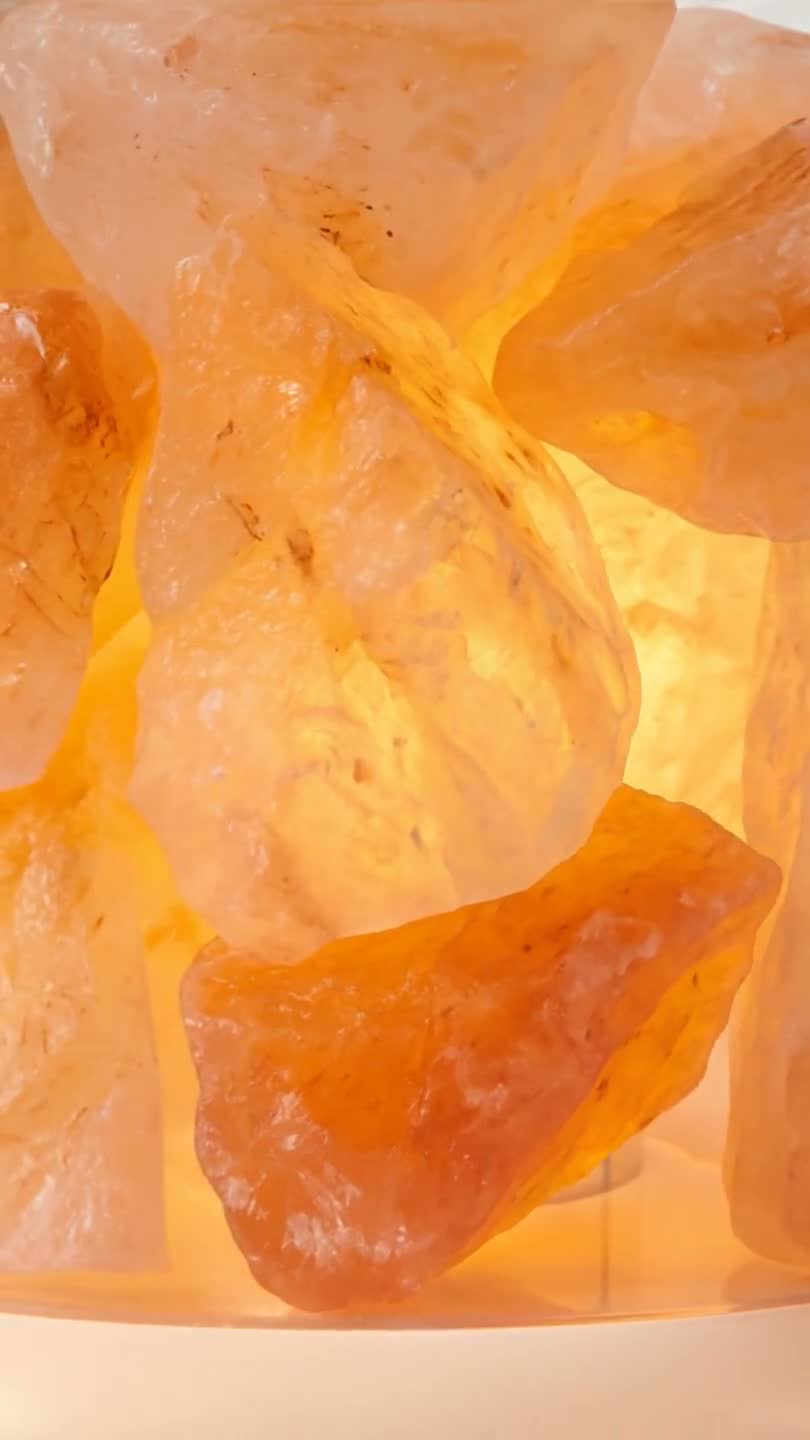
Hold the lamp up to the light and look for banding and cloudy white streaks. Those veins are trapped minerals and micro-fractures from 250 million years in the mountain. Dyed or moulded fakes tend to look like one bright, even coat of colour with no depth.
How bright is the glow?
A real salt lamp glows a soft, warm amber, closer to a candle or an ember than a lamp you would read by. If it throws a bright white light that lights up the whole room, the crystal is either very thin, hollowed too far, or not salt at all.
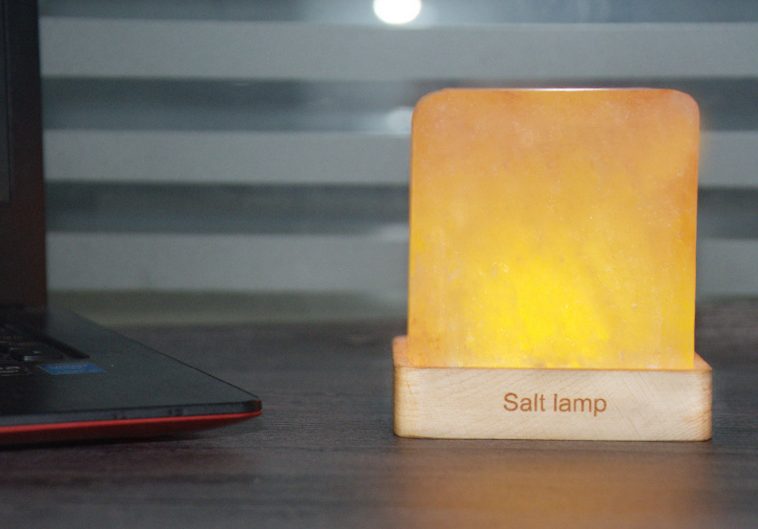
Thick, genuine salt filters the bulb into a gentle honey-orange pool of light. The glow should feel cosy rather than functional. A hollow shell or a clear resin body lets far too much raw light through, which is why so many fakes look harsh and bluish.
How heavy is it?
A real salt lamp is dense and feels noticeably heavier than it looks. Solid crystal salt has real mass, so a lamp that feels surprisingly light for its size is a strong hint that it is hollow, or moulded from resin rather than carved from rock.
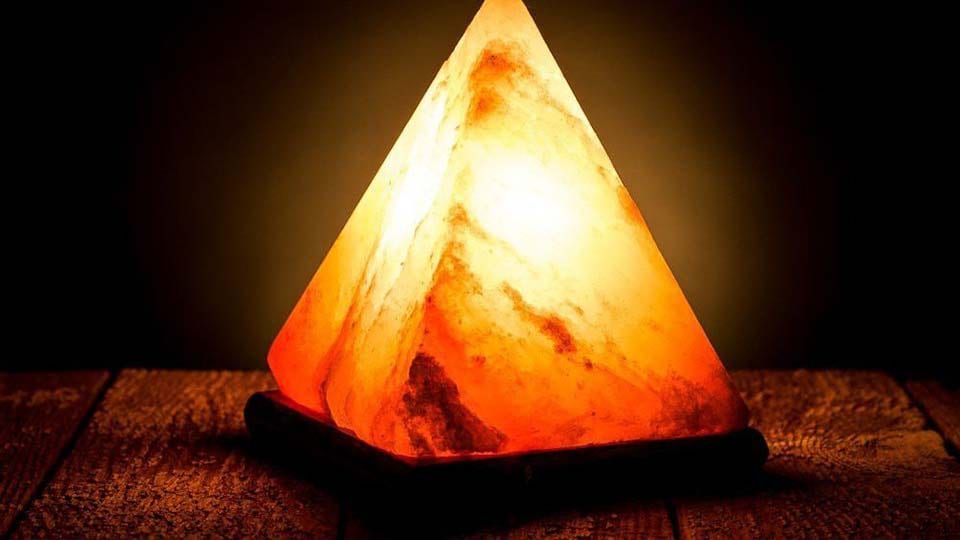
As a rough guide, a genuine palm-sized lamp still has real heft in the hand, and larger pieces are clearly a two-hand lift. If a big lamp feels like an empty ornament, be suspicious of what is inside the base and behind the surface.
Does colour rub off on a damp white cloth?
Rub a genuine lamp gently with a damp white cloth and, at most, you will see a faint pale, salty film. If vivid pink or orange colour bleeds onto the cloth, the piece has been dyed, and dyed rock is not the natural crystal you are paying for.
A little cloudy salt residue is completely normal and even reassuring, because it means real salt is dissolving very slightly into the damp cloth. Bright coloured streaks are not. Test on the base or an underside spot first so you are never surprised.
Is it perfectly shaped, or one of one?
A real salt lamp is one of one: slightly asymmetric, with chips, ridges, and unique veining. If two lamps look like identical twins with a flawless, repeated shape, they were most likely moulded from resin rather than carved from a single block of crystal.
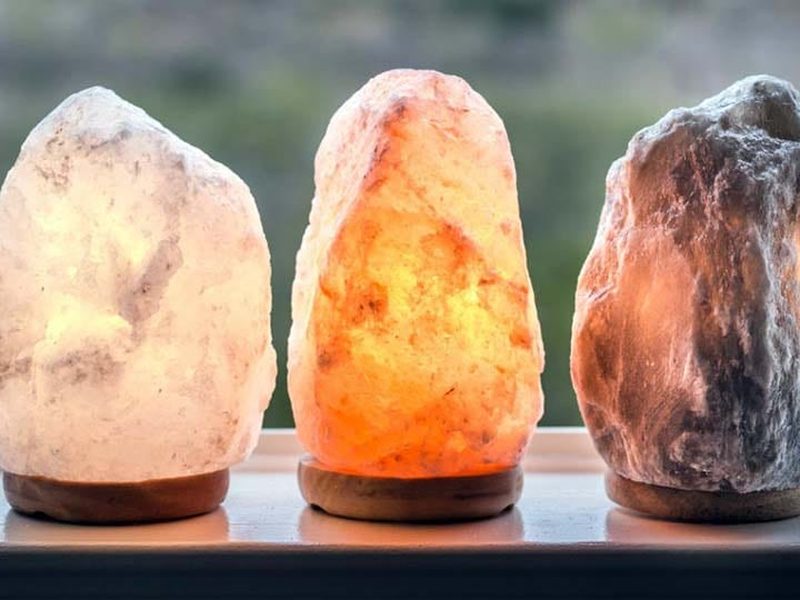
Natural salt is cut and hand-shaped, so no two pieces ever match. Small surface chips and an uneven silhouette are the fingerprint of the real thing, not a flaw. A production line of matching, glossy, perfectly smooth lamps is the tell-tale sign of a mould.
Will the seller name the source?
An honest seller will happily name the source: the Salt Range, around the Khewra region of Punjab, Pakistan, the only place genuine Himalayan salt is mined. A seller who stays vague about where the salt comes from is the biggest warning sign of all.
Provenance is the one check a fake cannot fake. Ours comes from the Salt Range in Punjab, Pakistan, where our family has mined and exported it for three generations. You can read exactly how it travels from mine to lamp on our story page.
What a real salt lamp will not do
A real salt lamp will not meaningfully purify your air or fill a room with negative ions. The science does not support those claims, and we will not make them. We think you deserve the honest version before you spend a penny.
What a genuine Himalayan salt lamp does give you is real, and quietly lovely: a warm, one-of-a-kind amber glow from a crystal that formed more than 250 million years ago, deep inside a mountain. It is a piece of natural rock salt with its own colour, veining, and shape that exist nowhere else. And it comes from a family that has worked this salt for three generations, so you know exactly what you are bringing home and where it came from.
Frequently asked questions
Where do real Himalayan salt lamps come from?
All genuine Himalayan salt comes from the Salt Range in Punjab, Pakistan, around the Khewra region. It is the only place on earth where this rose-coloured rock salt is mined. If a lamp is sold as Himalayan but the seller cannot name a source in the Salt Range of Pakistan, treat that as a warning sign. Our family has mined and exported salt from this region for three generations.
Do salt lamps melt or dissolve?
No, a salt lamp will not melt or dissolve in normal indoor use. In humid air it may gather a few surface droplets, which is simply the salt doing what salt does. Wipe it with a dry cloth and let the warmth of the bulb keep it dry. Only leaving it unlit in a very damp room for a long time would cause noticeable wear.
Is a white salt lamp fake?
Not necessarily. Rare white Himalayan salt does exist and is genuinely prized, so a true white lamp can be real. That said, many cheap, bright-white lamps are dyed or made from resin rather than crystal salt. Judge a white lamp by the same checks: weight, a warm glow, uneven veining, and a seller who will name the source.
Is sweating a defect?
No, sweating is not a defect. It is one of the clearest signs that your lamp is real salt, because only genuine salt gathers moisture from humid air. Wipe the surface with a dry cloth and keep the lamp lit so the gentle warmth keeps it dry. You can read our full guidance on our salt lamp care page.
From the Salt Range to your home
Every PinkSalt lamp is real, hand-shaped Himalayan crystal from the Salt Range of Punjab, Pakistan, from a family that has mined and exported this salt for three generations.